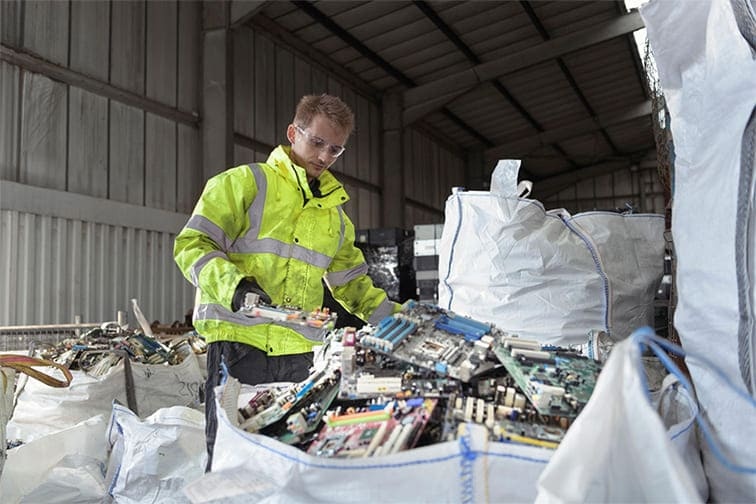
As electronic devices continue to evolve rapidly worldwide, electronic waste (E-Waste) has become one of the fastest-growing solid waste streams globally.
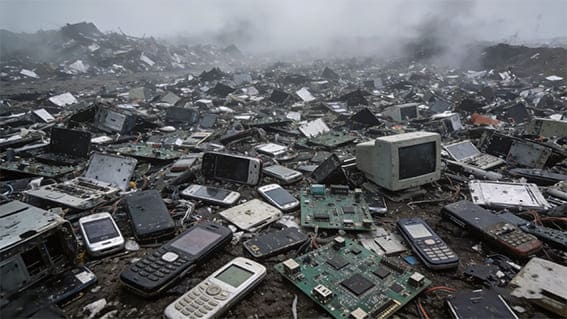
Discarded smartphones, computers, televisions, circuit boards, cables, and household appliances contain large amounts of plastics, metals, and reusable resources.
At the same time, E-Waste also contains hazardous substances that may cause long-term environmental and health risks if improperly handled.
Therefore, E-Waste recycling is not only an environmental responsibility but also a critical part of the global circular economy.
Global E-Waste Is Growing Rapidly
Driven by consumer electronics, 5G devices, electric vehicles, and smart home technologies, global E-Waste volumes continue to increase rapidly.
Shorter product life cycles are creating increasing demand for efficient recycling solutions. Particularly in:
- Household appliances
- IT equipment
- Electrical cables
- Lithium battery systems
- Industrial electronic equipment
the recycling value of recoverable materials continues to rise.
Key Challenges in E-Waste Recycling
E-Waste has a highly complex structure composed of metals, plastics, rubber, glass, and electronic components.
As a result, recyclers face several technical challenges during processing:
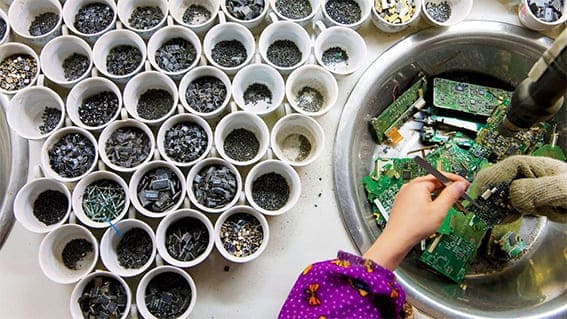
1. Complex Material Composition
Different electronic devices contain highly varied structures
and materials.
Circuit boards, plastic housings, and metal components
require completely different processing methods.
2. Difficult Separation of Metals and Plastics
Efficient separation of copper, aluminum, steel, and plastics is critical for maximizing material value.
3. Dust and Safety Concerns
E-Waste crushing processes may generate dust and hazardous particles.
Therefore, recycling systems must include stable, safe, and environmentally friendly designs.
Why Are Pre-Treatment Systems So Important?
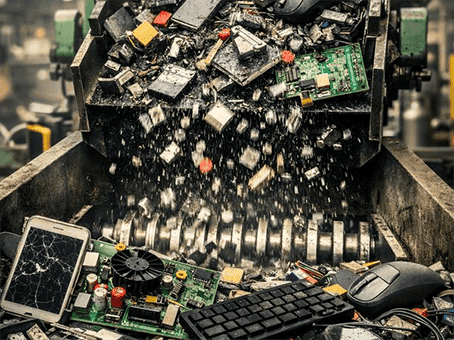
In E-Waste recycling, front-end pre-treatment directly affects downstream separation efficiency and material purity.
Efficient pre-treatment systems typically include:
- Dual-shaft shredders
- Industrial crushers
- Magnetic separators
- Eddy current separators
- Dust collection systems
- Conveyor systems
Proper pre-treatment significantly improves metal recovery
rates while reducing downstream energy consumption.
How NeoElement tech Supports E-Waste Recycling
NeoElement tech specializes in front-end pre-treatment systems for industrial waste and plastic recycling
Their equipment is widely used for:
- Household appliance recycling
- WEEE recycling
- Cable recycling
- Plastic electronic scrap
- Industrial electronic waste
Compared with traditional systems, NeoElement tech focuses more on:
- High operational stability
- Lower energy consumption
- High-torque shredding
- Intelligent control systems
- Modular maintenance design
The Resource Value Hidden in E-Waste
Many electronic waste materials contain valuable recoverable metals
For example: Copper、Aluminum、Gold、Silver、Rare metals.
At the same time, engineering plastics such as ABS, HIPS, and PP also have significant recycling value.
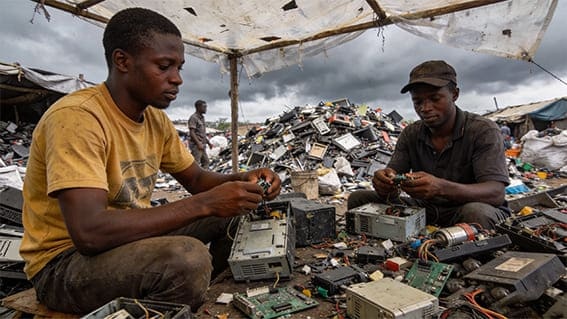
Smart Automation Is Becoming the Industry Standard
The future of E-Waste recycling will focus more on
- Automated sorting
- AI recognition systems
- Intelligent monitoring
- Energy efficiency
- High-purity material recovery
High-performance shredding and pre-treatment systems will become the foundation of the entire recycling chain
Conclusion
E-Waste recycling not only reduces environmental pollution but also enables valuable resource recovery.
As the global circular economy continues to grow, demand for efficient, stable, and intelligent pre-treatment equipment is rapidly increasing.
NeoElement tech is helping recyclers worldwide build more efficient and sustainable E-Waste recycling systems through advanced
shredding and crushing solutions